
CONCEPT
The subject shifts.
The way of facing it does not.
There are years of painting the sea, years of painting people,
and years of painting worlds not yet seen.
The subject may shift, but the stance taken before a single canvas never does.
What this painter has held to, set down here.
THE NAME AS A WORK
A name, itself a work
Click a character to reveal its meaning
得重
TOKUSHIGE
Tokushige — the hand that layers.
When 得 (to obtain) stands beside 重 (to layer), what rises between them is the very act of making. To receive what is seen and what is felt, and to lay down paint, and time, in layer upon layer. With each stroke something is gained, and again it is layered. Out of that endless repetition, a single painting comes into being.
聖治
SEIJI
Seiji — that which gathers them into one.
When 聖 (the honed, the inviolable) stands beside 治 (to govern), a gaze appears that gathers countless layered gestures into a single stillness. If Tokushige is to layer, Seiji is to draw together. To settle scattered impulses and trials into one finished canvas — the clear gaze that works at the very end of creation.
Tokushige, the hand that layers.
Seiji, the eye that gathers.
Each character carries its own meaning; set side by side, they become the story of making itself.
In "Tokushige," the hand that gains and layers, over and over.
In "Seiji," the gaze that clarifies those countless layers into a single canvas.
A name, as a cultural idea, reaches as far as the shape of one's consciousness and self — and so, taking his own name as a way of living, he goes on making work.
01 ── In dialogue with materials
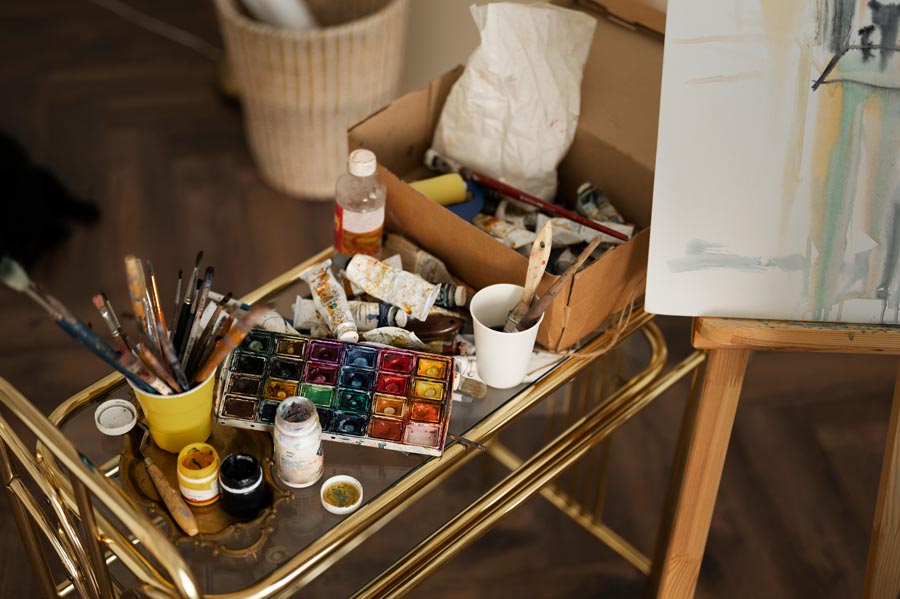
Technique follows the subject.
Oil, acrylic, resin. The materials used are chosen by what the subject asks for, each time. Rather than pouring a subject into a fixed mould, the right touch is searched out for every single work. Which is why the finished form is unknown to anyone, until the painting begins.
02 ── Becoming the memory of a place
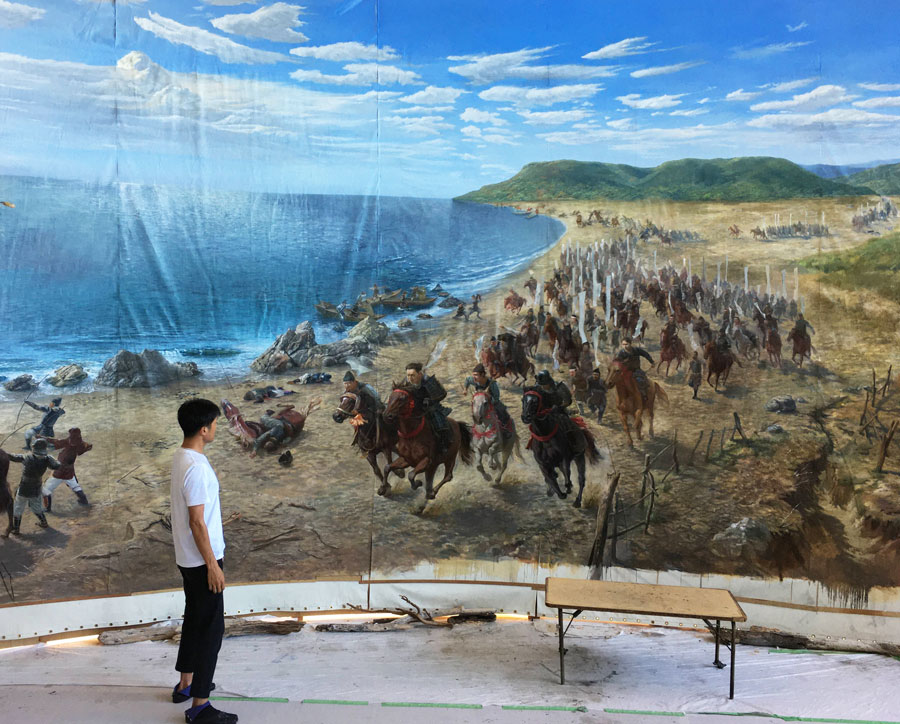
A single work becomes part of the land.
A panoramic painting among Japan's largest does not end at completion; it remains with the place. The work moves beyond private ownership and is woven into the memory of those who come. To paint is also to leave something behind, in a place and in time.
03 ── Not to speak, but to let the work speak
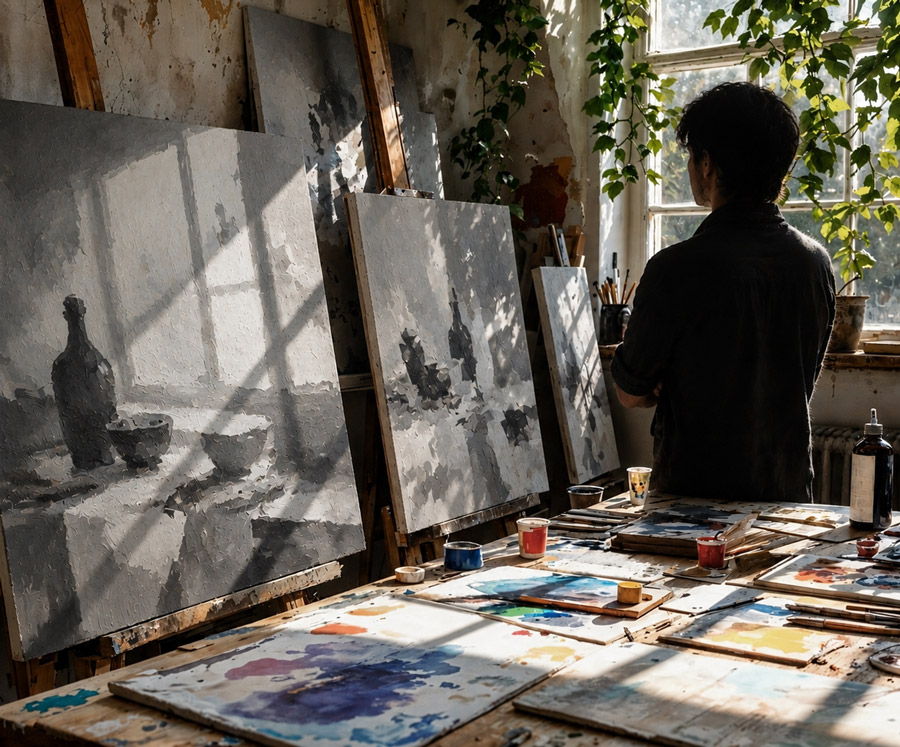
Entrusted to the one who stands before it.
The meaning of a work is never explained in advance. What each person receives, in their own time, standing before a single canvas — that openness is itself part of the work. To say little is nothing other than an act of trust in the viewer.
What comes next
is known to no one yet.
CONTACT